Enterprise AI teams across Australia, New Zealand, Singapore, Malaysia, the Philippines, and Indonesia are moving beyond experimental natural language processing (NLP) projects. They are now expected to deliver domain-specific language models that operate reliably in production, align with governance standards, and integrate with enterprise data systems.
The question is no longer whether NLP can extract meaning from text. The real question is: how should organizations train, manage, and govern domain-specific NLP models at scale?
Many enterprises still rely on traditional NLP training workflows built from open-source libraries, custom pipelines, and manual annotation processes. Others are evaluating Watson Knowledge Studio as a structured alternative designed for enterprise-grade AI development.
This article analyzes the differences between Watson Knowledge Studio and traditional NLP training approaches. It examines governance implications, scalability constraints, integration considerations, and decision criteria that enterprise teams should evaluate before committing to a long-term strategy.
Why NLP Training Is Becoming a Governance Issue, Not Just a Technical One
In early AI adoption phases, NLP training was largely a technical exercise. Data scientists experimented with datasets, built models, and deployed prototypes. Success was measured by accuracy scores.
That approach does not hold in enterprise environments where NLP outputs influence compliance, risk scoring, financial decisions, or citizen services.
When language models classify regulatory documents, analyze contracts, or interpret medical notes, mistakes are no longer academic. They carry financial and reputational consequences.
Enterprise leaders increasingly ask:
- How do we ensure consistency across NLP models built by different teams?
- How do we track training data lineage?
- How do we enforce annotation standards across regions?
- How do we align model training with enterprise data catalog policies?
This is where the comparison between traditional NLP workflows and Watson Knowledge Studio becomes meaningful.
What Is Watson Knowledge Studio?
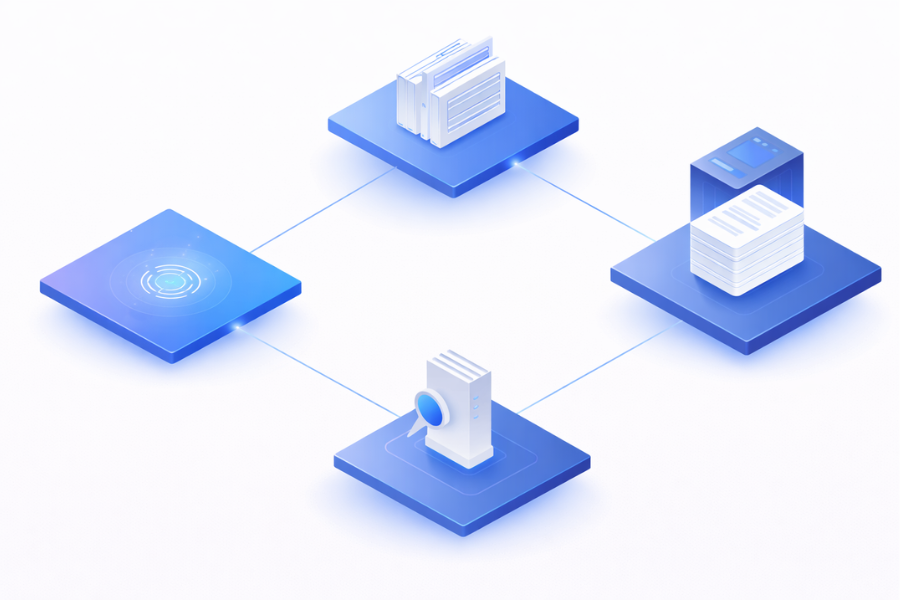
Watson Knowledge Studio is a tool within IBM’s AI ecosystem designed to help organizations build, train, and manage domain-specific NLP models using structured annotation and governance workflows.
Unlike generic NLP frameworks, Watson Knowledge Studio emphasizes:
- Controlled annotation environments
- Collaboration between domain experts and data scientists
- Integration with enterprise data governance systems
- Alignment with tools such as Watson Knowledge Catalog and IBM data catalog solutions
Traditional NLP approaches, by contrast, often rely on:
- Open-source frameworks (e.g., spaCy, NLTK, transformers)
- Custom annotation tools
- Decentralized training pipelines
- Ad-hoc documentation
Both approaches can produce accurate models. The key difference lies in governance, scalability, and operational consistency.
So the core question becomes: is your NLP strategy optimized for experimentation, or for enterprise accountability?
How Traditional NLP Training Typically Works
To understand the comparison, it helps to examine what most organizations currently do.
A typical traditional NLP workflow includes:
- Collecting domain-specific text data
- Cleaning and preprocessing the data
- Manually annotating text using custom or third-party tools
- Training models using machine learning libraries
- Evaluating model performance
- Deploying via APIs or embedded systems
This process offers flexibility and control. Data science teams can choose algorithms, architectures, and optimization techniques freely.
However, several challenges frequently emerge:
- Annotation inconsistency across teams
- Poor documentation of training data lineage
- Lack of integration with enterprise data catalog systems
- Difficulty enforcing governance standards
- Limited collaboration between subject matter experts and technical teams
Is your NLP pipeline transparent enough for an audit? Can you easily demonstrate how training data was labeled and approved?
In regulated industries, these questions cannot be ignored.
How Watson Knowledge Studio Changes the Training Model
Watson Knowledge Studio introduces structured workflows for building domain-specific NLP models.
Instead of relying solely on data scientists, it enables domain experts to participate in annotation through controlled interfaces.
Key characteristics include:
- Predefined annotation guidelines
- Role-based access controls
- Built-in evaluation metrics
- Structured model lifecycle management
- Integration with Watson Knowledge Catalog
This structured approach reduces variability. It also aligns NLP development with broader enterprise data governance practices.
Rather than asking “Can we build an accurate model?” the platform shifts the question to “Can we build an accurate, auditable, and reusable model?”
Governance and Data Catalog Integration
One of the most significant differences between Watson Knowledge Studio and traditional NLP training lies in governance integration.
Enterprise environments increasingly depend on centralized data governance frameworks supported by tools such as:
- Watson Knowledge Catalog
- IBM knowledge catalog
- Enterprise data catalog platforms
- Metadata management systems
Traditional NLP pipelines often operate outside these frameworks. Data scientists may store datasets locally or in separate environments without formal registration in an IBM data catalog.
This creates governance blind spots:
- Who approved the dataset?
- What version of the dataset was used?
- Were sensitive data fields anonymized?
- Can we trace model predictions back to training data?
Watson Knowledge Studio is designed to operate within the IBM AI ecosystem, enabling alignment with metadata governance policies.
Is your NLP environment integrated with your enterprise data catalog, or functioning independently?
For compliance-heavy industries, this distinction matters significantly.
Collaboration Between Domain Experts and Data Scientists
Traditional NLP initiatives are typically driven by data scientists, with domain experts providing periodic guidance rather than direct involvement in annotation workflows. While this model may appear efficient, it often creates gaps between technical labeling decisions and real business definitions. When subject-matter expertise is filtered indirectly, inconsistencies can emerge in how entities are defined, how ambiguous cases are handled, and how terminology evolves over time. Without continuous oversight from domain specialists, annotation drift can occur, gradually reducing model accuracy and business relevance.
Watson Knowledge Studio introduces a more integrated collaboration model. It enables subject-matter experts to participate directly in annotation, validation, and refinement of entities and relationships. Instead of acting solely as reviewers, domain experts become active contributors within a structured annotation environment. This reduces interpretation errors and ensures that labels reflect operational realities rather than purely statistical assumptions.
The collaborative approach strengthens model relevance, improves annotation consistency, and enhances alignment with real-world business processes. However, it does require coordination, clearly defined roles, and disciplined workflow management. Cross-functional collaboration introduces operational complexity, particularly in large organizations. Despite this, the structured involvement of domain experts significantly reduces downstream rework caused by misaligned labeling strategies and inconsistent training data.
Can Traditional NLP Approaches Scale Across Regions?
Scaling NLP training across multiple business units or geographies introduces operational challenges.
Consider an enterprise operating in Australia, Singapore, and Indonesia. Each region may require:
- Language-specific models
- Regulatory terminology
- Localized datasets
In traditional setups, separate teams may independently build similar models with different standards.
This leads to duplication and inconsistent outcomes.
Watson Knowledge Studio provides centralized governance and standardized workflows, reducing fragmentation.
However, scalability depends on adoption discipline. Even the best platform cannot enforce governance without organizational commitment.
Are your regional NLP initiatives aligned under a common framework?
Accuracy vs Governance: Is There a Trade-Off?
Some teams assume structured platforms limit experimentation. Traditional NLP pipelines may allow faster experimentation with cutting-edge models.
This raises a practical question: does adopting Watson Knowledge Studio reduce flexibility?
In most enterprise contexts, the trade-off is not between accuracy and governance. It is between short-term experimentation and long-term sustainability.
Traditional pipelines may achieve rapid prototyping speed. Watson Knowledge Studio emphasizes repeatability and oversight.
Organizations must decide which priority aligns with their AI maturity stage.
Build vs Structured Platform
Traditional NLP approaches can appear cost-effective because open-source libraries are free. However, hidden costs often emerge:
- Annotation tool licensing
- Infrastructure maintenance
- Compliance risk mitigation
- Rework due to inconsistent labeling
- Governance audits
Watson Knowledge Studio introduces platform costs but reduces operational fragmentation.
When evaluating cost, enterprises should ask:
- How much time is spent reconciling annotation inconsistencies?
- How frequently are models retrained due to poor documentation?
- What is the cost of a compliance failure linked to NLP misclassification?
Cost evaluation should extend beyond licensing fees to lifecycle management expenses.
Risk and Compliance Analysis
Regulated industries in APAC face increasing scrutiny over AI decision-making processes.
Traditional NLP workflows may lack:
- Centralized audit trails
- Role-based access controls
- Integrated metadata governance
- Structured review workflows
Watson Knowledge Studio, when integrated with IBM data catalog systems, supports traceability and accountability.
If an auditor requests evidence of model training practices, can your team provide structured documentation immediately?
Governance readiness is no longer optional for enterprises deploying NLP in compliance-sensitive contexts.
What Enterprise Teams Should Expect
Adopting Watson Knowledge Studio is not a lightweight deployment. Enterprise teams should anticipate a structured, multi-phase rollout that balances technical configuration with governance alignment and cross-functional coordination.
Phase 1: Governance Alignment
Before any model training begins, organizations must define annotation standards, establish reviewer roles, and formalize approval workflows. This includes aligning NLP development with enterprise policies embedded in a Watson Knowledge Catalog, IBM Knowledge Catalog, or broader data catalog environment. Clear ownership of datasets, lineage tracking, and compliance checkpoints should be documented early. Without this foundation, downstream scalability becomes fragile.
Phase 2: Data Preparation and Catalog Integration
Data assets must be registered within an enterprise-grade IBM data catalog or comparable data catalog framework. This is not a simple upload process. Metadata completeness, classification tagging, access controls, and governance rules must be verified. Enterprises leveraging Watson Knowledge Catalog benefit from consistent data lineage and audit trails, which are critical in regulated industries. Poor metadata discipline at this stage creates long-term technical debt.
Phase 3: Annotation and Model Training
Domain experts, not just data scientists, should participate in annotation. Industry-specific terminology, contextual meaning, and regulatory nuance require subject-matter expertise. Evaluation benchmarks must be predefined, including precision, recall, and bias checks. Governance controls embedded through IBM Knowledge Catalog integration ensure training data remains version-controlled and traceable.
Phase 4: Integration with Downstream Systems
After validation, trained models must be deployed into production environments and connected to analytics platforms, automation engines, or compliance monitoring systems. Integration often spans APIs, workflow automation layers, and enterprise data platforms. When aligned with a structured IBM data catalog architecture, outputs can be governed consistently across departments.
Traditional NLP pipelines follow similar technical steps, but they frequently lack centralized governance visibility. Enterprise adoption is not purely technical; it demands coordination across legal, compliance, IT, and business leadership. Teams should expect structured reviews, documentation cycles, and executive oversight before full-scale rollout.
When to Choose Watson Knowledge Studio
Watson Knowledge Studio is most appropriate for organizations that operate in complex, high-accountability environments.
It is particularly suitable for enterprises that:
- Operate in regulated industries such as finance, healthcare, or public sector
- Require audit-ready NLP workflows with traceable data lineage
- Manage complex domain-specific terminology that demands expert annotation
- Depend on structured governance frameworks supported by Watson Knowledge Catalog, IBM Knowledge Catalog, or enterprise data catalog systems
- Maintain strict access control policies across distributed teams
The integration with IBM data catalog tools enables centralized oversight, consistent metadata management, and policy enforcement across NLP lifecycles. For organizations prioritizing compliance, transparency, and operational continuity, this structure provides long-term resilience.
However, traditional NLP approaches may remain appropriate when:
- Projects are experimental or exploratory
- Governance requirements are limited
- Teams are small and operate within a centralized data environment
- Rapid prototyping and iteration speed outweigh regulatory exposure
In early-stage innovation environments, flexibility may matter more than governance depth. But as AI maturity increases, so does scrutiny.
Enterprises should assess their regulatory exposure, scaling ambitions, and existing data catalog maturity before committing to a strategy. The choice is not about technical superiority. It is about operational sustainability under real-world enterprise constraints.
FAQs
1. What is Watson Knowledge Studio used for?
Watson Knowledge Studio is used to train domain-specific NLP models within a governed, collaborative, enterprise-ready environment.
2. How does it differ from traditional NLP training?
Traditional NLP often relies on decentralized tools and custom workflows. Watson Knowledge Studio provides structured annotation, governance integration, and lifecycle management.
3. Does Watson Knowledge Studio integrate with data catalogs?
Yes. It aligns with tools such as Watson Knowledge Catalog and IBM data catalog solutions to support metadata governance.
4. Is traditional NLP unsuitable for enterprises?
Not necessarily. It can work effectively in experimental or low-risk contexts but may require additional governance controls for regulated environments.
5. Which approach is more scalable across regions?
Watson Knowledge Studio offers centralized governance that reduces fragmentation when scaling NLP initiatives across business units.
Choosing Between Flexibility and Structure
The real decision is not which NLP approach sounds more advanced. It’s about what your organization is built to sustain. Traditional NLP pipelines offer speed and flexibility, making them suitable for experimentation. Watson Knowledge Studio, however, is engineered for structured development, governance control, and seamless alignment with enterprise data ecosystems.
As AI initiatives scale across departments and regions, regulatory oversight, auditability, and integration become non-negotiable. Accuracy alone is not enough. Long-term success depends on repeatability, data governance, and architectural alignment.
For enterprises evaluating this shift, Nexright helps bridge strategy and execution- designing governed AI frameworks, integrating Watson Knowledge Studio into existing data platforms, and ensuring NLP initiatives are scalable, compliant, and enterprise-ready from day one.