Customer expectations across Australia, New Zealand, Southeast Asia, and broader APAC have shifted decisively. Customers no longer tolerate long wait times, repeated explanations, or fragmented service experiences across channels. They expect fast, accurate, and consistent responses-regardless of whether they interact through chat, voice, email, or mobile apps.
Many IT and customer experience leaders ask a practical question: How do we scale customer support without scaling cost, complexity, or risk? The answer increasingly lies in enterprise-grade conversational AI, not consumer chatbots or generic automation tools.
This is where Watson AI applications stand apart. Built for regulated, high-volume, multilingual, and mission-critical environments, IBM’s Watson portfolio enables organizations to deploy conversational AI IBM platforms that integrate deeply with existing systems, workflows, and governance models.
This article breaks down 10 real-world Watson AI applications that are actively transforming AI customer support and chatbot IBM deployments across industries-grounded in real operational needs, not theoretical use cases.
Conceptual Foundation: What Makes Watson AI Different for Customer Support
Before diving into applications, it’s important to establish a shared understanding of what Watson AI is-and what it is not.
Watson AI is not a single chatbot or language model. It is a portfolio of enterprise AI services designed to support secure, governed, and explainable automation across customer interactions. At the core of conversational deployments is IBM Watson Assistant, supported by natural language understanding, orchestration, analytics, and integration services.
Leaders often ask, Why not use lightweight chatbot tools or generic LLMs?
The answer is control, compliance, and scale. Watson AI applications are built to:
- Integrate with CRM, ERP, ITSM, and legacy systems
- Support role-based access and auditability
- Operate reliably in regulated industries
- Handle multilingual and omnichannel interactions
- Provide explainable and governable AI behavior
This foundation enables Watson to power customer support use cases that go far beyond scripted FAQs.
1. Intelligent Virtual Agents for Tier-1 Customer Support
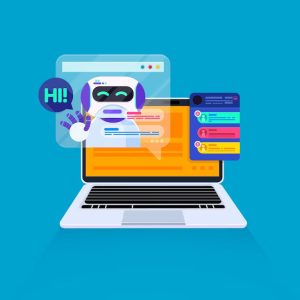
One of the most common Watson AI applications is the deployment of intelligent virtual agents to handle Tier-1 customer inquiries.
Support leaders often ask, Can conversational AI handle real customer issues, not just basic questions? In practice, Watson-powered virtual agents manage account queries, service requests, order tracking, billing explanations, and policy clarifications with high accuracy.
Unlike rule-based bots, Watson virtual agents:
- Understand intent, not keywords
- Maintain context across turns
- Escalate seamlessly to human agents
- Learn from resolved interactions
For enterprises, this translates into faster response times, reduced ticket volumes, and consistent customer experiences across channels.
2. Omnichannel Conversational AI Across Chat, Voice, and Messaging
Customers move fluidly between channels. A conversation may start on a website chat, continue over WhatsApp, and escalate to voice support. Traditional systems struggle to maintain continuity.
Watson AI applications enable true omnichannel conversational AI IBM deployments, where context follows the customer. Teams often ask, How do we avoid customers repeating the same issue multiple times? Watson maintains session context across channels, ensuring continuity.
This capability is particularly valuable in:
- Telecommunications
- Banking and financial services
- Government service portals
- Utilities and healthcare providers
3. AI-Powered Self-Service for Knowledge-Heavy Support Environments
Enterprises with complex products or services face a unique challenge: customers need accurate, up-to-date information that changes frequently.
Watson AI integrates conversational interfaces with enterprise knowledge sources, including policy documents, manuals, and internal databases. Support managers often ask, How do we ensure AI responses are accurate and compliant?
Watson addresses this through:
- Controlled knowledge ingestion
- Confidence scoring
- Response grounding
- Governance workflows
This makes Watson AI applications particularly effective for AI customer support in regulated and high-risk domains.
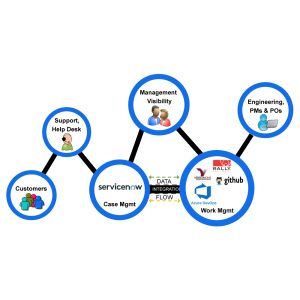
4. Automated Case Creation and Intelligent Routing
Customer conversations often trigger downstream actions-creating cases, updating records, or initiating workflows.
Watson conversational AI can automatically:
- Create support tickets
- Populate CRM fields
- Route cases based on intent, priority, or customer profile
- Trigger backend workflows
Operations teams frequently ask, Can AI reduce manual handoffs without breaking processes? Watson integrates directly with enterprise systems, enabling automation without bypassing governance or controls.
5. Voice AI for Call Center Deflection and Assistance
Voice remains a dominant channel in many APAC markets. Watson AI applications extend beyond chat into voice-based interactions using speech recognition and conversational orchestration.
Call center leaders often ask, Can AI actually reduce call volumes without hurting satisfaction? Watson voice bots handle routine calls while assisting live agents with real-time prompts, summaries, and next-best actions.
This hybrid model improves efficiency while preserving human oversight where needed.
6. Multilingual Conversational AI for Regional Scalability
APAC enterprises operate across multiple languages, accents, and cultural contexts. Watson AI applications are designed to support multilingual interactions at scale.
Executives often ask, Is it realistic to deploy conversational AI across regions without duplicating effort? Watson enables centralized intent models with localized language variations, reducing operational overhead.
This is especially relevant for organizations operating across Australia, Southeast Asia, and emerging markets.
7. Proactive Customer Support Through Predictive Signals
Modern customer support is not just reactive. Watson AI applications can analyze behavioral signals, usage patterns, and historical data to initiate proactive outreach.
Teams ask, Can conversational AI prevent issues before customers complain? In practice, Watson-powered systems notify customers of potential disruptions, guide them through resolutions, or suggest preventive actions-reducing inbound support demand.
8. Secure Conversational AI for Regulated Industries
Security and compliance remain top concerns for enterprise AI adoption.
Watson AI applications are built with:
- Role-based access control
- Data masking
- Audit logs
- Explainable decision paths
Compliance teams often ask, Can conversational AI meet regulatory requirements? Watson’s architecture supports financial services, healthcare, and government use cases where data governance is non-negotiable.
9. Human-in-the-Loop Support for Complex Escalations
Not every issue should be automated. Watson AI applications are designed to work alongside human agents, not replace them.
When conversations reach complexity thresholds, Watson:
- Transfers context to agents
- Summarizes customer intent
- Suggests resolution steps
- Learns from outcomes
This reduces handling time while improving resolution quality-an essential balance for enterprise customer support.
10. Continuous Learning and Performance Optimization
Finally, Watson AI applications provide analytics and insights into conversational performance.
CX leaders ask, How do we know if conversational AI is actually working? Watson offers:
- Intent accuracy metrics
- Containment rates
- Escalation analysis
- Customer sentiment insights
These insights allow teams to refine experiences continuously, improving both customer satisfaction and operational efficiency.
Practical Application: What Implementation Looks Like in the Real World
Deploying Watson conversational AI is not a plug-and-play exercise. Successful implementations involve:
- Clear intent design
- Integration planning
- Governance alignment
- Change management
- Continuous optimization
Common mistakes include over-automation, poor knowledge curation, and treating AI as a one-time project rather than an evolving capability.
Decision Guidance: When Watson AI Is-and Isn’t-the Right Choice
Watson AI applications are well-suited for:
- Enterprises with complex support environments
- Regulated industries
- High-volume, multilingual customer interactions
- Organizations prioritizing governance and control
They may be less suitable for:
- Small teams with simple FAQ needs
- Organizations seeking consumer-grade chatbots without integration depth
Honest evaluation ensures long-term success.
How Enterprises Are Operationalizing Conversational AI at Scale
As customer expectations continue to rise, enterprises will increasingly rely on Watson AI applications to deliver consistent, scalable, and trusted support experiences. The future of customer support is not fully automated-it is intelligently orchestrated, combining human judgment with enterprise-grade conversational AI that can operate reliably at scale.
For organizations across APAC, this shift is no longer optional. It is foundational to delivering modern customer experiences while maintaining governance, security, and operational control. Nexright works with enterprises at this intersection-helping translate Watson-powered conversational AI from capability into real-world, production-ready customer support systems aligned with regional, regulatory, and operational realities.
FAQs
1. What are Watson AI applications used for in customer support?
They automate customer interactions, resolve common issues, route cases, and support agents with contextual intelligence.
2. How is conversational AI IBM different from generic chatbots?
It integrates deeply with enterprise systems, supports governance, and handles complex, regulated use cases.
3. Can chatbot IBM solutions scale across regions?
Yes. Watson supports multilingual and omnichannel deployments across large geographies.
4. Is AI customer support secure for regulated industries?
Watson includes built-in security, access control, and auditability features for compliance.
5. Does Watson replace human support agents?
No. It augments agents by handling routine tasks and supporting complex escalations.