Enterprise organizations across Australia, New Zealand, Singapore, Malaysia, the Philippines, and Indonesia increasingly rely on analytics platforms to convert operational data into decision-ready insights. As businesses scale across multiple systems, cloud platforms, and data warehouses, managing business intelligence workflows becomes significantly more complex.
IBM Cognos Analytics addresses this challenge by unifying reporting, visualization, forecasting, and enterprise planning into a single analytics environment. As organizations move beyond spreadsheet-driven reporting and disconnected BI tools, leadership teams require governed analytics systems that eliminate data silos and support consistent decision-making across departments.
Modern business intelligence is no longer limited to historical reporting. Enterprises now expect analytics platforms to support predictive insights, forward-looking planning, and AI-assisted decision support. IBM Cognos Analytics sits at the center of this shift, integrating traditional BI capabilities with advanced analytics and enterprise planning tools.
This article examines how Cognos Analytics fits into enterprise BI architectures, how organizations deploy it within data ecosystems, and how it transforms fragmented reporting processes into structured decision systems.
Understanding the Role of Cognos Analytics in Enterprise Data Environments
Business intelligence platforms exist because organizations generate far more data than humans can manually interpret. Enterprises collect operational data from ERP systems, customer platforms, supply chain tools, and digital channels. Without structured analytics workflows, these datasets remain disconnected and difficult to analyze.
Cognos Analytics addresses this challenge by acting as a centralized analytics and reporting platform. It connects data sources, organizes them into structured models, and delivers insights through dashboards, visualizations, and enterprise reports.
When organizations explore analytics platforms, a common question emerges: What are the key features of IBM Watson? While Watson refers primarily to AI services rather than BI reporting tools, the question often appears during analytics discussions because enterprises evaluate cognitive analytics capabilities alongside reporting infrastructure. Cognos Analytics complements Watson-based AI capabilities by delivering structured insights derived from enterprise data.
Another frequent question within data strategy discussions is What is DataStage used for? DataStage is typically used for ETL and data integration processes, preparing datasets before analytics platforms consume them. Cognos relies on such data pipelines to ensure the information used in dashboards and reports is consistent and trustworthy.
Organizations building enterprise analytics capabilities also encounter questions like What is IBM Watson’s knowledge catalog? Data catalogs help organizations understand their data assets, maintain governance, and prevent duplication. Cognos analytics workflows often rely on well-managed data catalogs to ensure the reporting layer operates on accurate datasets.
In practical terms, Cognos sits between the data preparation layer and the decision-making layer. Data pipelines deliver prepared datasets, while Cognos transforms those datasets into reports, dashboards, and planning models that guide strategic decisions.
This structure allows organizations to move beyond static reporting toward dynamic analytics workflows that update automatically as new data arrives.
Core Capabilities of IBM Cognos Analytics
IBM Cognos Analytics provides a collection of capabilities that support enterprise reporting, visualization, and analytics governance. These capabilities form the backbone of many enterprise BI environments.
Advanced Reporting and Enterprise Dashboards
Reporting remains one of the most critical functions of business intelligence platforms. Finance departments, operations teams, and executive leadership depend on structured reports to understand performance across the organization.
Key reporting capabilities include:
- Automated financial reporting
Financial teams often produce recurring reports covering revenue, expenses, and forecasting metrics. Cognos automates these processes by connecting directly to enterprise data sources and generating standardized reports on a scheduled basis. - Operational dashboards for management teams
Operational leaders require real-time visibility into performance metrics such as production output, supply chain efficiency, and customer engagement. Cognos dashboards allow teams to monitor key metrics continuously rather than waiting for periodic reports. - Custom analytics models for specialized departments
Different departments require different views of enterprise data. Cognos allows analysts to build customized analytics models that reflect departmental requirements without compromising centralized governance. - Self-service analytics for business users
Business analysts can explore data independently without relying entirely on IT teams. This capability significantly accelerates decision cycles and encourages data-driven thinking throughout the organization.
Organizations evaluating analytics platforms sometimes ask Is IBM Watson open source? While Watson services are not open source in the traditional sense, they integrate with open data ecosystems and analytics environments. Cognos complements such AI capabilities by providing structured visualization and reporting.
Decision-makers also frequently explore questions like Is IBM Watson worth it? The answer often depends on whether the organization requires AI-driven insights in addition to structured analytics. Cognos itself focuses primarily on BI workflows, but its integration with AI services enhances advanced analytics scenarios.
Data Visualization and Interactive Analysis
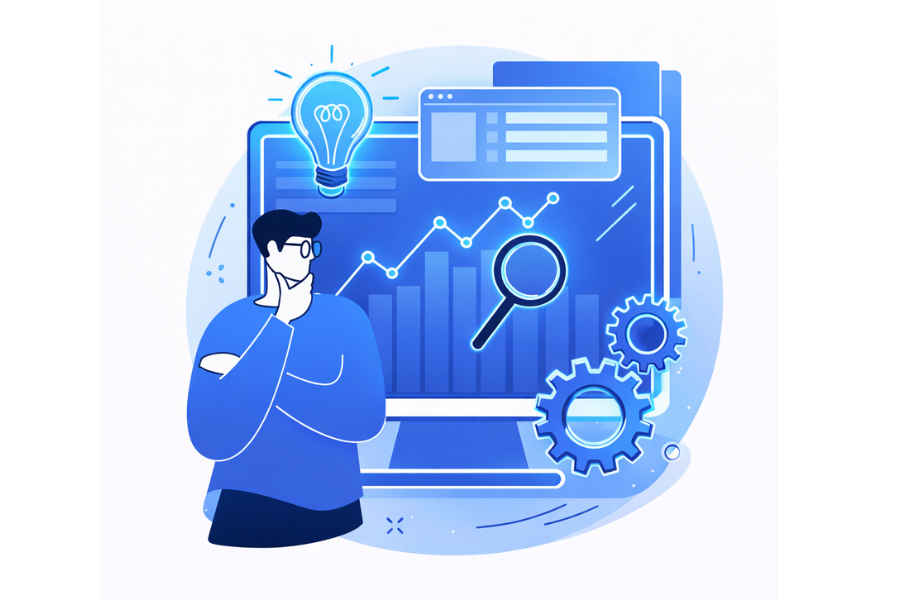
Modern analytics platforms must present information in a format that decision-makers can quickly interpret. Raw datasets or static reports rarely support rapid decision-making.
Cognos Analytics includes a robust visualization layer designed to convert complex datasets into understandable visual insights.
Key visualization capabilities include:
- Dynamic dashboards with interactive filters
Executives can explore performance metrics by adjusting filters, time ranges, or operational variables. This interactive environment helps decision-makers investigate trends without waiting for analysts to generate new reports. - Geographic and operational data mapping
Organizations operating across multiple regions benefit from location-based visualizations. These dashboards allow leaders to compare performance across markets or operational regions. - Visual storytelling for executive presentations
Analytics results often need to be presented to leadership teams or board members. Cognos visualizations allow analysts to transform datasets into compelling visual narratives. - Embedded analytics within enterprise applications
Some organizations embed Cognos dashboards directly within operational platforms such as ERP or CRM systems. This approach brings analytics closer to day-to-day workflows.
When analytics strategies expand into AI capabilities, organizations often ask How to access IBM Watson? Access typically occurs through cloud platforms that host Watson AI services. Cognos analytics outputs can feed into AI models or consume insights generated by those models.
Another question frequently raised in analytics planning is What is the purpose of Watson Knowledge Studio? Knowledge Studio focuses on training machine learning models to understand domain-specific language. When used together with analytics platforms, these technologies help organizations combine structured data analysis with AI-driven insights.
Enterprise Planning and Performance Management
Reporting explains what happened. Planning systems help organizations determine what should happen next.
Cognos Analytics integrates closely with Planning Analytics, allowing enterprises to connect reporting workflows with forecasting and budgeting processes.
Planning capabilities typically include:
- Financial forecasting and budgeting models
Finance teams can create predictive models that estimate future performance based on historical data. Cognos integrates these forecasts with reporting dashboards to provide a complete performance view. - Scenario analysis for strategic planning
Executives can evaluate potential outcomes by adjusting assumptions such as revenue growth, cost structures, or market expansion plans. - Cross-department planning collaboration
Planning systems often involve multiple departments contributing forecasts. Cognos and Planning Analytics provide a shared environment where these inputs can be consolidated and analyzed. - Performance management dashboards
Organizations can monitor how actual results compare with forecasts, enabling faster course corrections when performance deviates from expectations.
During analytics planning discussions, some teams ask What is IBM Watson used for in healthcare? Healthcare organizations frequently combine analytics platforms with AI tools to analyze clinical data, patient outcomes, and operational efficiency. Cognos provides the reporting layer that helps healthcare administrators interpret these datasets.
Another question sometimes arises in enterprise AI conversations: Who uses IBM Watson? Industries such as finance, healthcare, retail, and manufacturing rely on Watson services for cognitive analytics. Cognos complements these systems by providing structured BI capabilities.
Practical Implementation of Cognos Analytics in Enterprise Workflows
Deploying an enterprise analytics platform requires more than installing software. Organizations must carefully design how data flows from operational systems into analytics environments.
Implementation typically begins with data architecture planning. Teams identify which datasets will support reporting workflows and ensure that data pipelines deliver consistent, accurate information. Without reliable data preparation processes, even the most advanced analytics platforms produce unreliable results.
Data governance is another essential component. Analytics systems often access sensitive operational or financial data. Organizations must establish governance policies that control data access and maintain compliance with regulatory requirements.
During implementation, organizations frequently explore broader AI capabilities. Questions such as Is Watson AI open source? and What happened to IBM Watson AI? appear as teams evaluate how AI services integrate with analytics infrastructure. Watson AI continues to evolve as part of IBM’s broader AI strategy, focusing on enterprise AI governance and trusted AI frameworks.
Training and change management also play an important role. Business users must understand how to interpret analytics dashboards and incorporate insights into operational decisions. Without proper training, analytics systems risk becoming underutilized reporting tools rather than decision platforms.
Finally, organizations must integrate Cognos with other enterprise systems. Data warehouses, ETL pipelines, and planning systems must all align with the analytics layer to ensure consistent reporting.

Evaluating When Cognos Analytics Is the Right Choice
Selecting an enterprise BI platform requires careful evaluation of organizational needs. Cognos Analytics is particularly well suited for organizations that require structured reporting, governance, and integration with enterprise planning systems.
Enterprises with complex reporting requirements benefit most from Cognos because the platform excels at generating standardized reports across multiple departments. Finance organizations in particular rely on Cognos to maintain consistency in financial reporting.
Organizations evaluating analytics tools often explore broader AI questions such as Is there any free AI I can use? or Which AI model is completely free? While free AI tools exist for experimentation, enterprise analytics platforms prioritize reliability, governance, and integration rather than cost alone.
Some organizations also ask How to get IBM Watson for free? Cloud platforms may offer limited trial environments for testing AI services, but enterprise deployments typically require commercial licensing due to the infrastructure and support involved.
Another recurring question in AI experimentation environments is Can I have my own AI for free? Open-source machine learning frameworks allow experimentation, but enterprise-grade analytics and AI solutions require structured infrastructure, governance, and integration.
For organizations evaluating analytics platforms, the most important consideration is alignment with long-term data strategy. BI tools should support enterprise growth, integrate with planning systems, and maintain governance across expanding data environments.
FAQs
What is IBM Cognos Analytics used for?
IBM Cognos Analytics is used for enterprise reporting, data visualization, and business intelligence workflows. It enables organizations to transform operational data into dashboards, reports, and predictive insights.
How does Cognos Analytics differ from traditional BI tools?
Traditional BI tools focus mainly on reporting. Cognos integrates reporting, visualization, and planning capabilities within a unified enterprise analytics platform.
Does Cognos support AI and predictive analytics?
Yes. Cognos integrates with AI platforms such as IBM Watson to support advanced analytics, predictive modeling, and cognitive insights.
Can Cognos integrate with cloud data platforms?
Cognos supports hybrid and cloud environments, allowing organizations to connect cloud data warehouses, on-premise databases, and analytics pipelines.
Is Cognos suitable for large enterprises only?
While often used by large enterprises, mid-sized organizations with complex reporting needs also benefit from Cognos analytics capabilities.
Turning Enterprise Data into Strategic Insight
Enterprise analytics platforms succeed when they transform fragmented datasets into structured decision systems. IBM Cognos Analytics fulfills this role by connecting enterprise data sources, organizing them into governed analytics models, and delivering insights through dashboards, reports, and planning environments.
Organizations operating across complex data environments require analytics platforms that maintain consistency while supporting advanced analysis. Cognos provides the reporting discipline and governance structure necessary for reliable business intelligence workflows.
Enterprises seeking to modernize their analytics infrastructure often rely on experienced implementation partners to align analytics tools with broader data strategy. Teams such as Nexright support organizations deploying IBM Cognos Analytics by integrating reporting systems with enterprise data architectures, ensuring analytics platforms deliver practical decision value rather than isolated dashboards.
As enterprise data ecosystems continue expanding, the ability to translate data into informed decisions will remain one of the defining capabilities of successful organizations. Platforms like Cognos represent the structured analytics foundation that allows enterprises to move from data accumulation toward data intelligence.