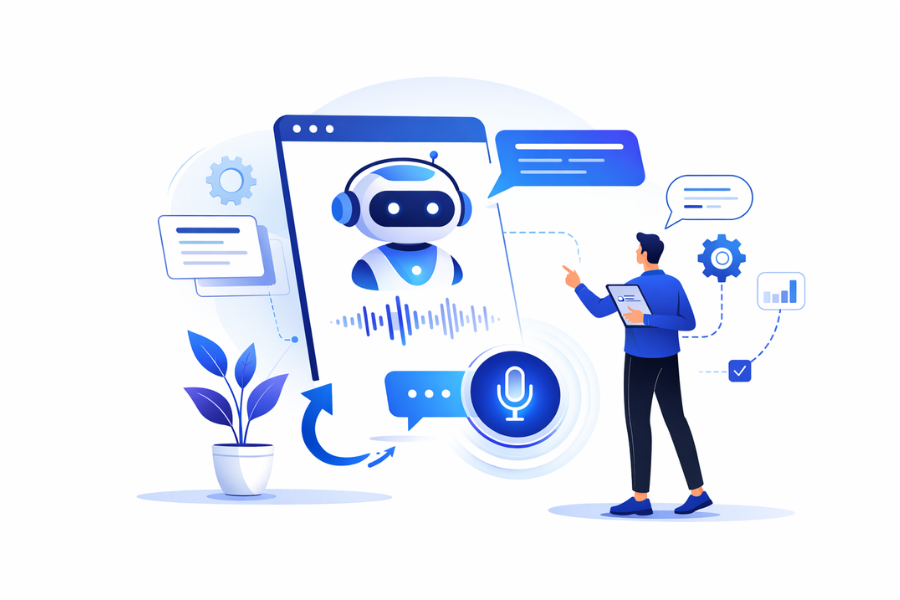
Leading organizations have achieved more than a 50% reduction in code development time.

Clients report a 30% improvement in playbook development, without compromising on quality.

Trusted by top-tier enterprises across multiple industries, including banking, IT, and consulting.
01

Lightning-fast data access, 8 times speedier, while slashing costs across cloud and on-premises data sources.
02

Free up data engineers for high-value tasks with 25-65% fewer ETL requests.
03

Say goodbye to $27 million in manual cataloging costs, just as IBM Global Chief Data Office did.

Generate production-ready code from plain language using Watsonx LLMs, optimized for diverse business applications.

No coding skills required-build custom generative AI assistants and workflows using an intuitive drag-and-drop interface.

Maintain full control with code source transparency and added security to safeguard against hackers and data misuse.

Easily transform legacy code into modern languages.
Accelerate IT automation tasks with tailored recommendations in YAML.

Modernize legacy COBOL applications into Java using AI-powered guidance.
Powered by IBM’s advanced AI technology to enhance developer workflows.
Customizable to meet your organization's specific needs.
Easily integrates into your current environment with minimal disruption.
Accelerating Enterprise Software Delivery with Watsonx Code Assistant
A global financial services enterprise needed to modernize and scale its legacy applications while reducing development bottlenecks. With business teams demanding faster feature releases, regulatory updates, and improved system reliability, traditional development practices became too slow and costly.
By implementing IBM Watsonx Code Assistant with Nexright, the organization built an AI-augmented engineering ecosystem that accelerates development velocity, reduces errors, supports large-scale code modernization, and enhances cross-team productivity.
Business challenge
The organization managed a large portfolio of legacy applications written across COBOL, Java, and .NET systems. Years of incremental updates resulted in technical debt, inconsistent coding standards, and low automation.
This complexity slowed the organization’s ability to ship updates, respond to market changes, and meet regulatory timelines. Manual code reviews and lack of documentation further increased risks, especially for mission-critical services.
Key Challenges:
- Over-extended development cycles caused by manual coding and review processes.
- High technical debt across aging applications such as COBOL and monolithic Java services.
- Limited documentation for legacy codebases, making onboarding slow and risky.
- Difficulty modernizing applications for cloud environments due to outdated architectures.
- Quality and security inconsistencies, requiring more robust automated checks.
The enterprise needed a scalable, AI-powered development solution that improves engineering efficiency, reduces modernization time, and supports secure deployment of new capabilities.
Solution
Partnering with Nexright, the organization deployed Watsonx Code Assistant to support modernization and day-to-day engineering workflows across multiple development teams.
The AI platform provides automated code generation, transformation, documentation, and testing capabilities — enabling engineers to accelerate delivery without compromising quality or compliance.
Solution Highlights:
- AI-Generated Code & Automation
Developers use Watsonx Code Assistant to generate boilerplate, rewrite complex functions, and automate repetitive tasks, improving delivery speed across teams. - Legacy Modernization Accelerator
Automated refactoring of legacy COBOL and Java applications into cloud-ready architectures reduced modernization time and engineering effort. - Context-Aware Code Recommendations
The model analyzes project structures, coding patterns, and business rules to provide accurate, secure recommendations aligned with organizational standards. - Integrated Security & Compliance
Automated detection of vulnerabilities, misconfigurations, and non-compliant patterns ensures that quality and regulatory requirements are consistently met. - Developer Upskilling & Enablement
Teams gain a self-service AI assistant that helps junior engineers become productive faster and senior engineers focus on high-value design work.
Solution components
- IBM Watsonx Code Assistant
- Watsonx.ai for training and fine-tuning domain-specific models
- IBM Cloud Pak® for AIOps (optional integration for code-to-production observability)
Automated Code Generation
Accelerates development by generating accurate functions, APIs, configuration files, and unit tests that follow enterprise coding guidelines.
AI-Driven Legacy Modernization
Refactors monolithic or outdated codebases into modular, cloud-ready components while preserving business logic and reducing human error.
Secure Engineering by Design
Identifies vulnerabilities and suggests fixes before code reaches production, improving compliance with financial and regulatory frameworks.
Result
- Reduced development time by up to 45%, accelerating feature delivery and regulatory update cycles.
- Decreased modernization effort by 60% for legacy applications using automated code transformation.
- Improved code quality and security through AI-driven review and automated vulnerability detection.
- Enhanced developer productivity, freeing senior engineers to focus on architecture and innovation.
- Faster onboarding of new developers with AI-generated documentation and guided assistance.
Watsonx Code Assistant dramatically reduced our modernization timelines and boosted our engineering productivity. With Nexright’s guidance, we now ship updates faster, improve code quality, and maintain compliance with far less manual effort.
— Head of Engineering Transformation, Global Financial Enterprise
Accelerating Legacy Application Modernization with IBM watsonx Code Assistant
A large public-sector social services institution operating nationwide needed to modernize decades-old COBOL and Java systems that were slowing down service delivery and increasing operational risk. Their core applications faced mounting technical debt, rising maintenance costs, and a shrinking pool of legacy-skilled developers.
Partnering with Nexright, the organization adopted IBM watsonx Code Assistant to automate code understanding, refactoring and modernization. The result: faster development cycles, significantly reduced manual effort, and safer migration to modern architectures — without disrupting mission-critical operations.
Business challenge
The organization depended on thousands of COBOL and Java programs powering citizen benefits, claims processing, and financial reporting. These systems had become difficult to maintain, and modernization initiatives repeatedly stalled because manual analysis alone could take months.
Key Challenges:
- Limited visibility into legacy systems
Fragmented documentation and decades of code revisions left teams unsure how applications were interconnected. - High risk of modernization errors
Manual code review created inconsistencies, regression issues, and extended migration timelines. - Shrinking legacy talent pool
Fewer developers were able to maintain or translate COBOL, increasing operational vulnerability. - Slow feature delivery
Modern service expectations required faster releases and new digital workflows that the legacy stack could not support.
The organization needed a reliable, AI-driven modernization accelerator that would reduce risk, compress timelines, and preserve institutional knowledge.
Solution
Nexright implemented IBM watsonx Code Assistant to create an AI-powered modernization workflow spanning code comprehension, refactoring automation, and migration support.
Solution Highlights:
- Automated Code Understanding
Used AI to analyze thousands of COBOL and Java programs, revealing dependencies, data flows, KPIs, and hidden risks in a fraction of the time required manually. - AI-Powered Refactoring Recommendations
Generated modernization-safe suggestions for restructuring modules, optimizing logic, and surfacing duplications — reducing technical debt before migration. - Accelerated Migration to Modern Languages
Enabled automated translation patterns for COBOL-to-Java and API-ready service architectures. - Development Productivity Boost
Provided developers with AI-generated code snippets, test cases, and documentation, improving quality and consistency. - Governed, Compliant Modernization
Maintained strict controls around code changes, audit visibility, and approval workflows, ensuring modernization aligned with internal and regulatory standards.
Solution components
- IBM watsonx Code Assistant
- IBM watsonx.ai
- IBM watsonx Orchestrate (optional for workflow automation)
AI-Driven Legacy Code Comprehension
Automatically maps data structures, logic paths, and dependencies — reducing months of analysis to minutes.
Streamlined Refactoring & Optimization Guidance
AI suggests improvements that strengthen application quality and reduce modernization risk.
Faster Migration to Modular & Cloud-Ready Architectures
Converts legacy logic into clean, maintainable patterns suitable for microservices and hybrid clouds.
Result
- 94% reduction in time to analyze core COBOL modules
Automated insight generation replaced manual code walkthroughs. - 80% reduction in effort to understand and segment complex applications
AI-driven dependency mapping accelerated modernization planning. - Feature delivery accelerated by 50%
Development teams relied on AI-generated code, documentation, and test cases. - Full modernization completed with zero business disruption
Mission-critical systems remained operational throughout the transition. - Significant long-term OPEX savings
Reduced dependence on niche legacy talent and minimized rewrites.
Nexright and watsonx Code Assistant gave us clarity into systems we’ve struggled with for decades. What once took weeks now takes hours. Our modernization roadmap is finally achievable — without risking service continuity.
— CTO, National Social Services Agency

IBM watsonx Code Assistant has been adopted by organizations worldwide to streamline their coding processes and maximize developer efficiency. Clients, such as leading banks and IBM Consulting, have seen drastic reductions in development time and improvement in overall productivity.