A different navigational experience: Instead of finding information via a search tab or drop-down menu, chatbots may open the door for conversation-based interfaces. And, companies can use the resulting feedback to optimize websites more quickly. The effect may be similar to the shift away from “like” buttons to more granular emoji-based reactions. We’re entering the age of context—a simple thumbs-up won’t cut it when we expect digital interaction to be more human and less text-based.
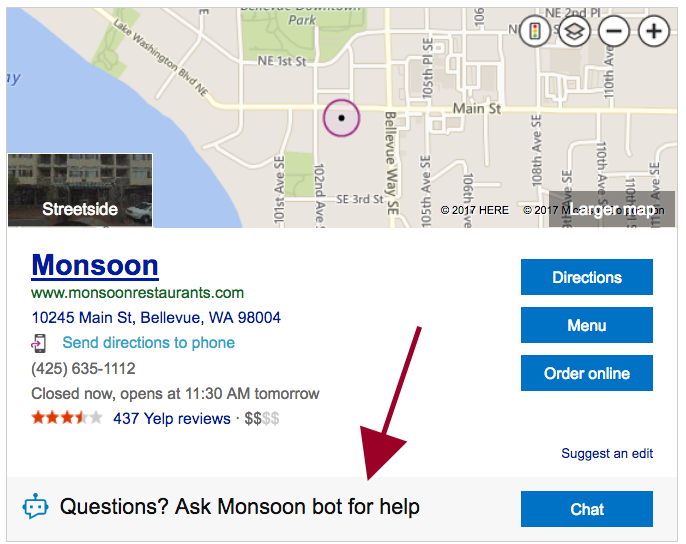
When thinking about the future of organic search, chatbots could be poised to become a much greater part of the consumer search experience. Bing has been testing chatbots directly in paid and organic search results, as shown below.
Similarly, Google has developed a new service called Chatbase, which provides analytics and suggestions for how to “fix” bot experiences to make them better for users. First of all, it is tapping into one of the biggest recent developments in the world of messaging apps: chatbots, or automatic response systems that sit on top of existing messaging platforms like Slack and Facebook’s Messenger. These tap into innovations in areas like natural language processing and machine learning to provide information and much more to users in a chat messaging format — a new way for users to interact with organizations and apps.
While chatbot integrations have been in the news over recent months, most people outside of the Seattle area won’t have seen them in action or truly considered how such integrations could be used.
For instance, if chatbot integrations within search results become a future reality, they could be used to carry out the following without ever leaving search results:
- Book a test drive
- Engage with customer service
- Order products and services
The possibilities are vast and shine a light on the importance of APIs and data integrations to enable the next generation of consumer interaction.
If Bing’s testing is successful, and we see chatbots roll out in search results. Getting brands to a point where they can leverage the technology is going to be a challenge never before experienced by owned performance and marketing teams.
Conversation-based engagement creates a feeling of connectivity and can improve customer relationships with a brand. Marketing and sales departments can capitalize not only on the data collected via chatbots but from the ability to create highly effective campaigns that improve customer loyalty and edge out competition.
What brands need to do to prepare for such shift?
Send us an Email to for a strategy paper on this.